It is easy to assume that children need more toys when they constantly say, “I’m bored.” But sometimes the problem isn’t that they don’t have enough things to play with. The problem is that many toys leave very little room for children to actually create the play themselves.
A screen provides everything. The characters are already there. The story is already written. The sounds, movements, rewards, and next steps are already decided.
Imaginative toys work differently.
A simple set of blocks can become a castle in the morning, a grocery store in the afternoon, and a spaceship before bedtime. A cardboard box can become a car, a house, or a robot. A scarf can become a superhero cape.
That is the beauty of open-ended play.
The goal isn’t to eliminate screens completely. Screens can have a place in childhood. But when you want to create more opportunities for independent, creative, screen-free play, choosing the right toys can make a big difference.
Here are 10 toys that encourage imagination instead of simply entertaining children.
1. Building Blocks
Building blocks may look simple, but they offer children something many modern toys don’t: the freedom to decide what to do with them.
A child can use the same set of blocks to build a tower today, a house tomorrow, and an entire imaginary city the next day. They can build, knock it down, discover what went wrong, and try again. There is no single “correct” way to play.
This kind of open-ended play gives children opportunities to practice problem-solving, planning, creativity, and spatial thinking. They have to make their own decisions—What should I build? How can I make it taller? Why did it fall? What can I change?
Wooden blocks, building bricks, and magnetic tiles can all provide these opportunities. What matters most isn’t the brand or how elaborate the set is, but whether the child has enough freedom to explore and create.
The real value of building blocks is that they don’t come with a story. Your child gets to make one.


2. Pretend-Play Sets
Pretend-play toys give children a chance to make sense of the world around them through play. A play kitchen, doctor kit, grocery set, toolbox, or cleaning set can turn familiar everyday activities into opportunities for imagination.
Children often recreate what they see at home and in their community. A child who watches you prepare meals might turn a play kitchen into a restaurant. A doctor’s kit might lead to a “clinic” where stuffed animals become patients waiting for checkups. Even a simple toolbox can inspire a child to pretend they are fixing everything in the house.
Beyond imagination, pretend play can support important skills such as communication, problem-solving, decision-making, and understanding different roles and perspectives. Children have to create situations, decide what happens next, and sometimes negotiate roles when playing with others.
And you don’t need to buy an entire pretend-play collection. A few simple props—or even everyday household items that are safe for children—can be enough to get a story started. The less the toy dictates what to do, the more room your child has to create.

- LIKE A REAL DOCTOR: Liberry kids’ doctor cart imitates the appearance of a real cart. Doctor costumes and medical tools …
- SAFE AND DURABLE: Our doctor playset is made of high quality plastic, which is no BPA and odor-free. There are no sharp …
- FUN AND EDUCATIONAL: Kids always scream out when going to visit a doctor or dentist. Our doctor toys can help to reduce …
3. Dolls and Action Figures
Dolls and action figures can be much more than toys that sit on a shelf. In a child’s imagination, they can become characters with their own personalities, relationships, problems, and stories.
A doll might be getting ready for school in the morning, running a pretend bakery in the afternoon, and going on an adventure before bedtime. An action figure might become a firefighter, explorer, superhero, parent, teacher, or even the villain in a story your child creates.
This kind of pretend play gives children the freedom to create their own narratives. They decide who the characters are, what they say, what happens to them, and how problems are solved. When children play together, they also have to communicate, negotiate roles, and adjust their ideas to keep the story going.
What’s especially valuable is that there isn’t a predetermined storyline. Unlike a show or game that tells children what happens next, dolls and action figures leave the story unfinished.
The child becomes the storyteller—and every time they play, the story can be completely different.
4. Toy Vehicles
Cars, trucks, trains, airplanes, and boats may seem like simple toys, but they can become the starting point for an entire imaginary world.
Give a child a few toy cars and some building blocks, and the blocks can quickly become houses, bridges, roads, or a busy city. Add a toy ambulance, and suddenly there’s an emergency to respond to. A cardboard box can become a garage, while a blanket might turn into a highway or a train station.
What makes vehicles especially valuable for imaginative play is how easily they can be combined with other toys and everyday materials. Children can create their own settings, decide what happens, and change the story whenever they want.
Rather than choosing toys that provide all the action themselves, look for simple toys that become more interesting when children add their own ideas.
The vehicle doesn’t need to talk, light up, or move on its own. Sometimes, it’s better when the child is the one making it move—and deciding where the story goes.


5. Play Dough
Play dough is a wonderful combination of creativity and sensory play.
Give a child some play dough and don’t tell them exactly what to make. They might create pizza, animals, flowers, monsters, people, or something that only makes sense inside their imagination. The process matters more than the finished product.
Children are making choices, experimenting with shapes, and turning an ordinary lump of material into something completely different.
Keep a small collection of cookie cutters, rolling pins, or other simple tools nearby, but don’t feel like you need an elaborate kit.
Sometimes, less is more.
6. Art Supplies
You don’t need an expensive art station to encourage creativity. A few sheets of paper, crayons, washable markers, colored pencils, and stickers can provide endless possibilities. The important thing is to avoid turning every art activity into a project that must look a certain way.
Instead of asking your child to draw a specific picture, try giving them a blank sheet of paper and let them decide what belongs on it. A blank page can become a family portrait, a map of an imaginary country, a monster, a comic book, or an entirely new invention.
The less you dictate the outcome, the more room there is for imagination.
7. Dress-Up Clothes
You don’t need to spend a lot of money on costumes to encourage pretend play. In fact, some of the best dress-up materials may already be sitting in your closet. Old shirts, hats, scarves, bags, sunglasses, and pieces of fabric can become costumes for almost any character a child can imagine. One day, your child might turn an old shirt into a chef’s uniform. The next day, the same shirt could become part of a superhero costume or a pirate’s outfit.
Dress-up play gives children the freedom to step into different roles and create their own stories. They decide who they want to be, what their character does, and what happens next. Along the way, they’re practicing creativity, communication, and perspective-taking without even realizing they’re learning.
Consider putting a few safe, child-friendly items in a basket or box where your child can easily reach them. There’s no need to organize them into perfect costumes. The more freedom children have to mix and match, the more opportunities they have to use their imagination.
8. Scarves and Fabric Pieces
Some of the best tools for imaginative play don’t even look like toys. A few scarves, pieces of fabric, or old blankets can give children countless ways to play. One moment, a scarf can be something. The next, it might become a river to cross, a picnic blanket, a tent, a princess dress, or a curtain for a pretend theater.
What makes these simple materials so valuable is that they don’t come with a specific purpose. A toy kitchen is designed to be a kitchen, but a piece of fabric can become almost anything your child imagines.
This kind of open-ended play encourages children to think creatively, make their own decisions, and find new uses for familiar objects. They aren’t simply following instructions—they’re deciding what something could be.
You don’t need to buy special play fabrics, either. A small basket of safe scarves, blankets, or fabric pieces from around the house can be enough to get their imagination started.
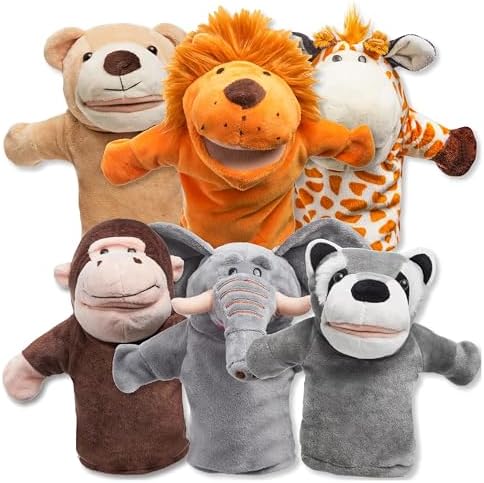
9. Puppets
Puppets can turn children from passive listeners into active storytellers.
With a few simple puppets, children can invent characters, create conversations, act out everyday situations, or develop completely imaginary adventures. They might put on a show for the family, act out a story they’ve heard, or simply have a conversation between two puppets while playing on their own.
Puppet play can also give children a comfortable way to explore feelings and situations. Sometimes it’s easier for a child to have a puppet say, “I’m scared,” or “I don’t want to share,” than to say those things directly.
You don’t need a fancy puppet theater or an elaborate collection. A few puppets and a blanket draped over a table can become a stage.
The important part is that there is no script.
Your child gets to decide who the characters are, what they say, and how the story unfolds. And when children create the story themselves, they’re naturally practicing language, imagination, problem-solving, and emotional expression.


10. Cardboard Boxes
Before you throw that empty cardboard box into the recycling bin, give your child a chance to play with it. A box can become a spaceship, a castle, a race car, a robot, a house, a grocery store, or practically anything else a child can imagine. And there’s a reason children are often fascinated by boxes, even when they’re surrounded by toys.
A cardboard box doesn’t tell them what it is supposed to be. That leaves the decision entirely up to them.
One day it’s a rocket. The next day it’s a shop. With a few crayons, some blankets, or a handful of stuffed animals, it can become part of an even bigger imaginary world.
This is a great reminder that encouraging imaginative play isn’t always about buying more toys. Sometimes, giving children simple materials and enough time to figure out what to do with them is more valuable than giving them another toy with a predetermined purpose.
The box may be simple, but that’s exactly what makes it so powerful: you provide the box; your child provides the imagination.
You Don’t Need More Toys—You Need More Opportunities to Play
Encouraging imaginative play doesn’t mean filling your home with more toys. In fact, children often have more meaningful play experiences when they have a smaller collection of simple, open-ended toys. Building blocks, art supplies, dolls, books, play dough, pretend-play props, and everyday materials like scarves and cardboard boxes can give children plenty of ways to create and explore.
When your child says, “I’m bored,” you don’t have to immediately provide another activity or hand over a tablet. Sometimes, a simple suggestion is enough: “Can you build a house for your toys?” or “What kind of restaurant could you create?”
Give them a starting point, then step back and let them take the idea wherever their imagination leads. Boredom can be uncomfortable at first, but it can also give children the space to discover how to entertain themselves.
The goal isn’t to raise a child who never uses screens. Screens are part of modern life, and there’s nothing wrong with enjoying them in moderation. What matters is making sure children also have plenty of time to build, pretend, create, explore, get messy, solve problems, and simply figure out what their imagination can do.